Publications

1995
Filipino sa Siglo 21
Jose V. Abueva
Filipinos, Koreans and Diversity
Jose Wendell Capili. 1995. “Filipinos, Koreans and Diversity.” Korea Herald, 30 June , Pp. 6.
Learning from Japan
Jose Wendell P. Capili. 1995. “Learning from Japan.” Korea Times, August , Pp. 6.
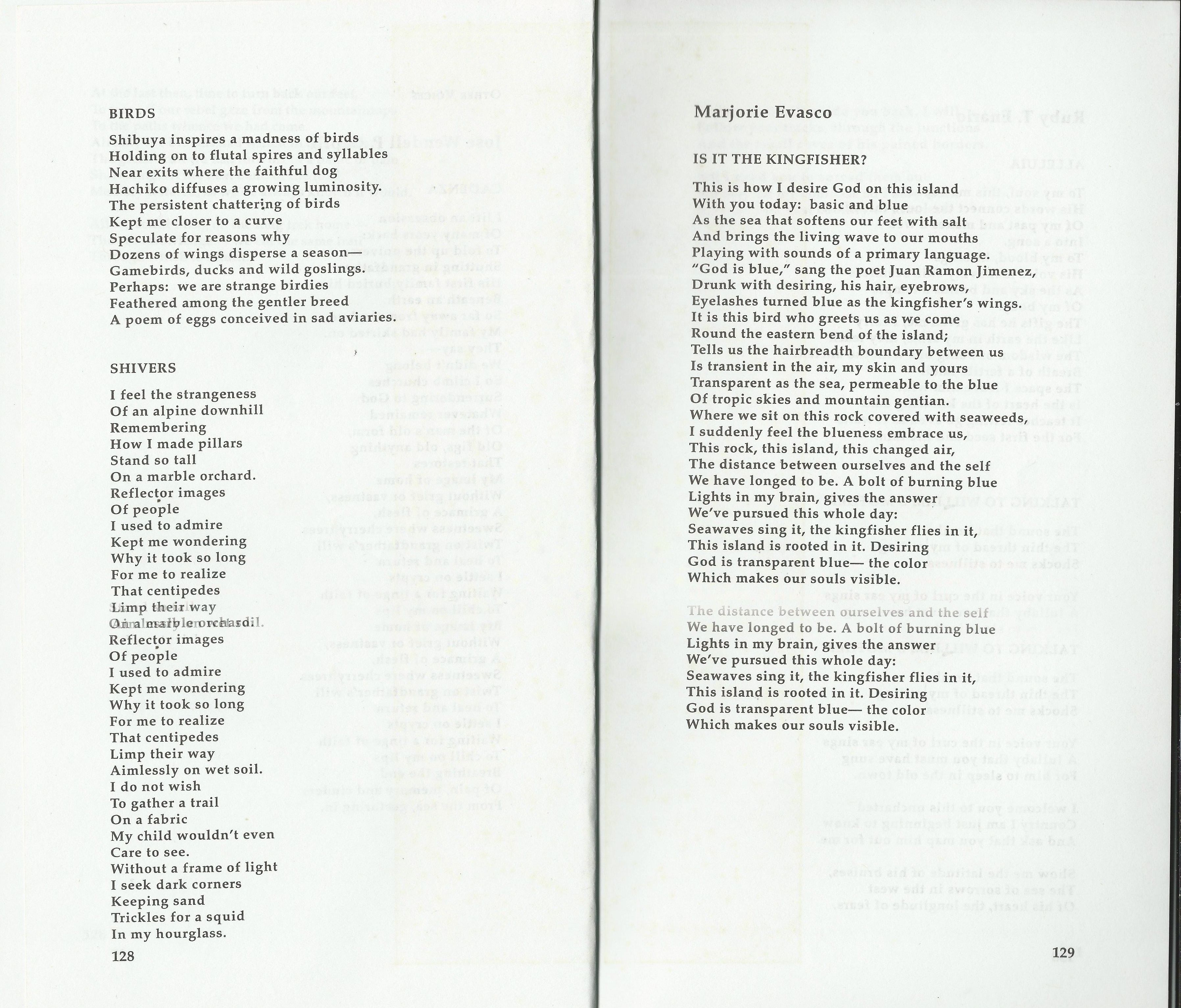
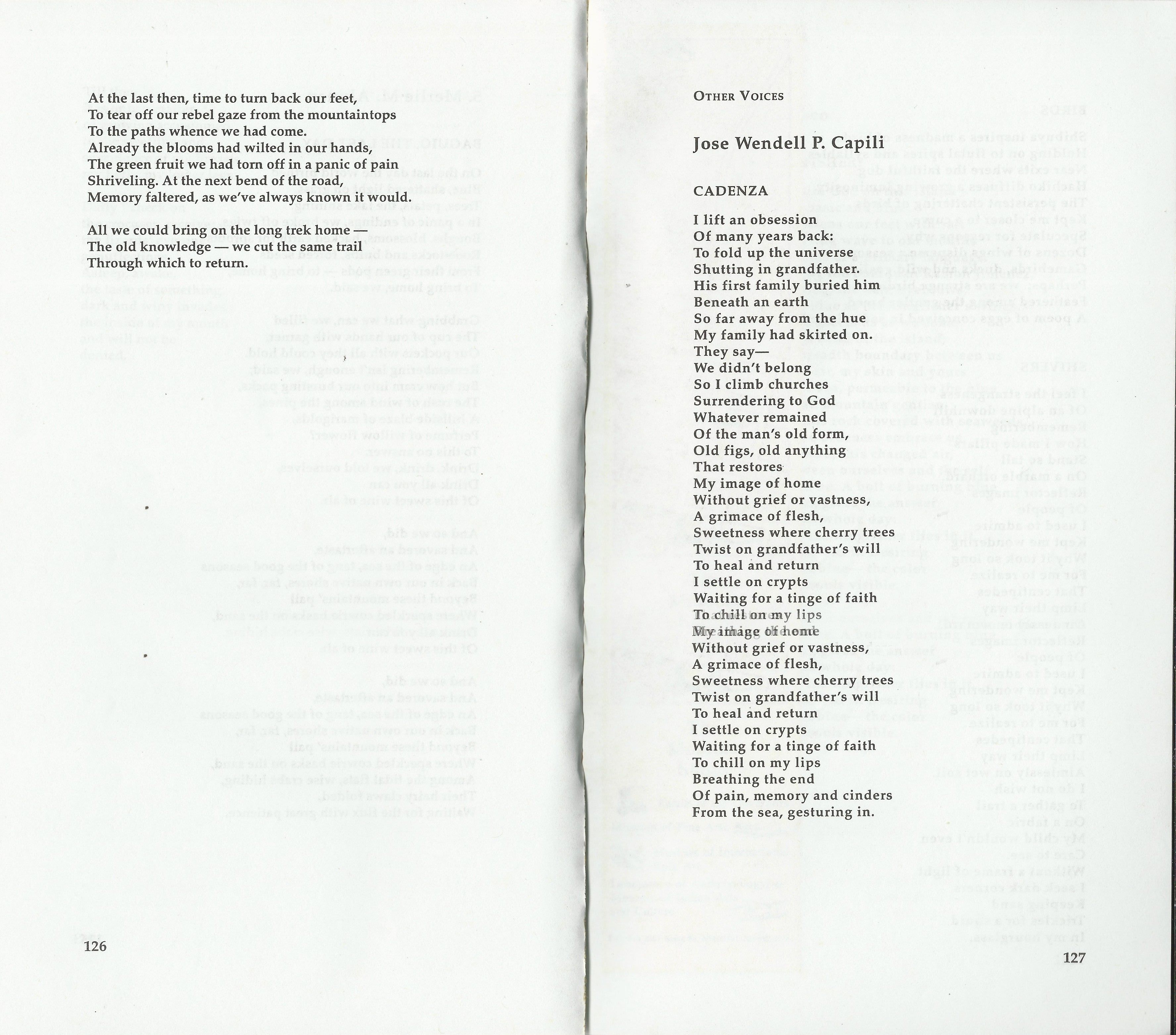
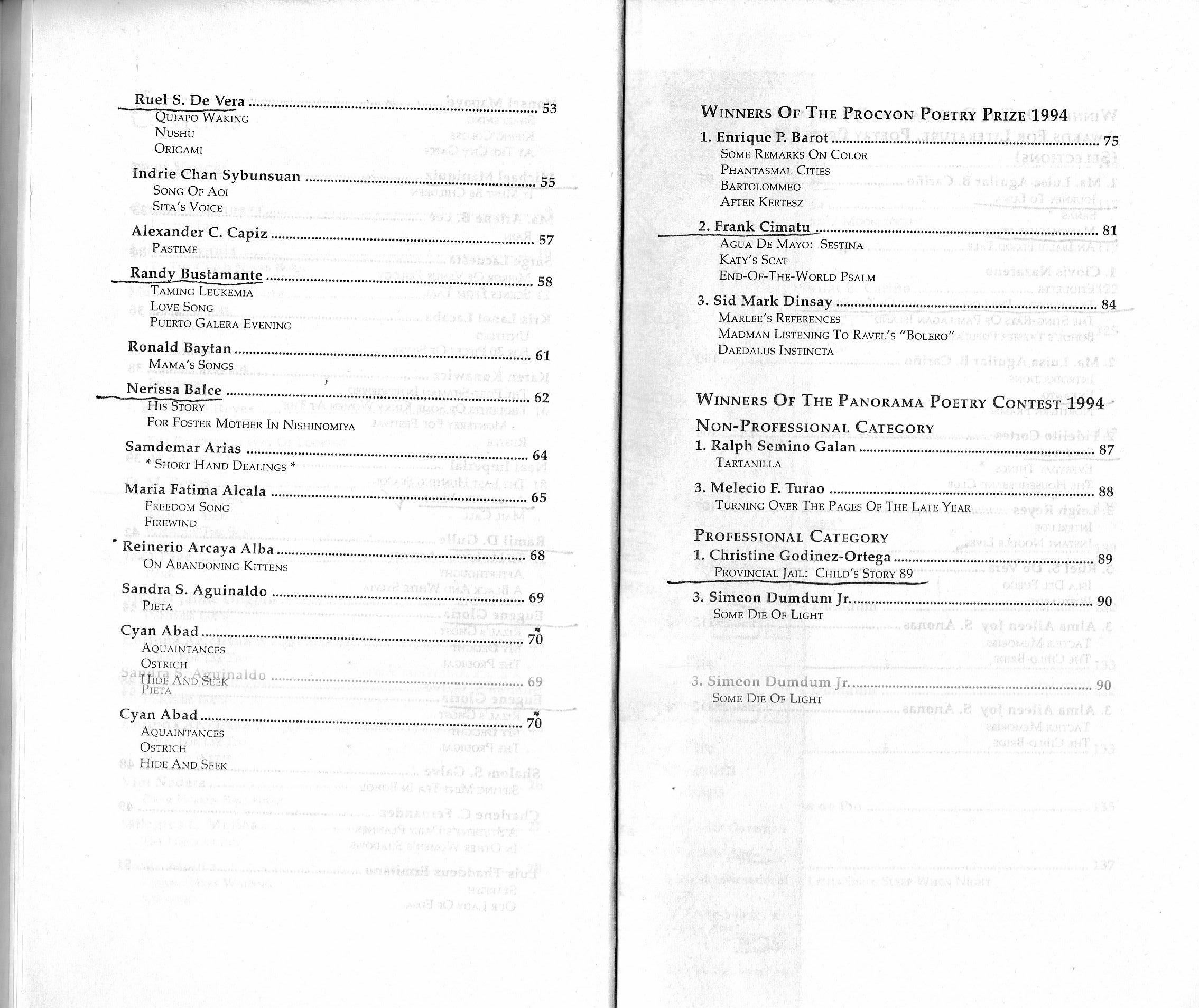
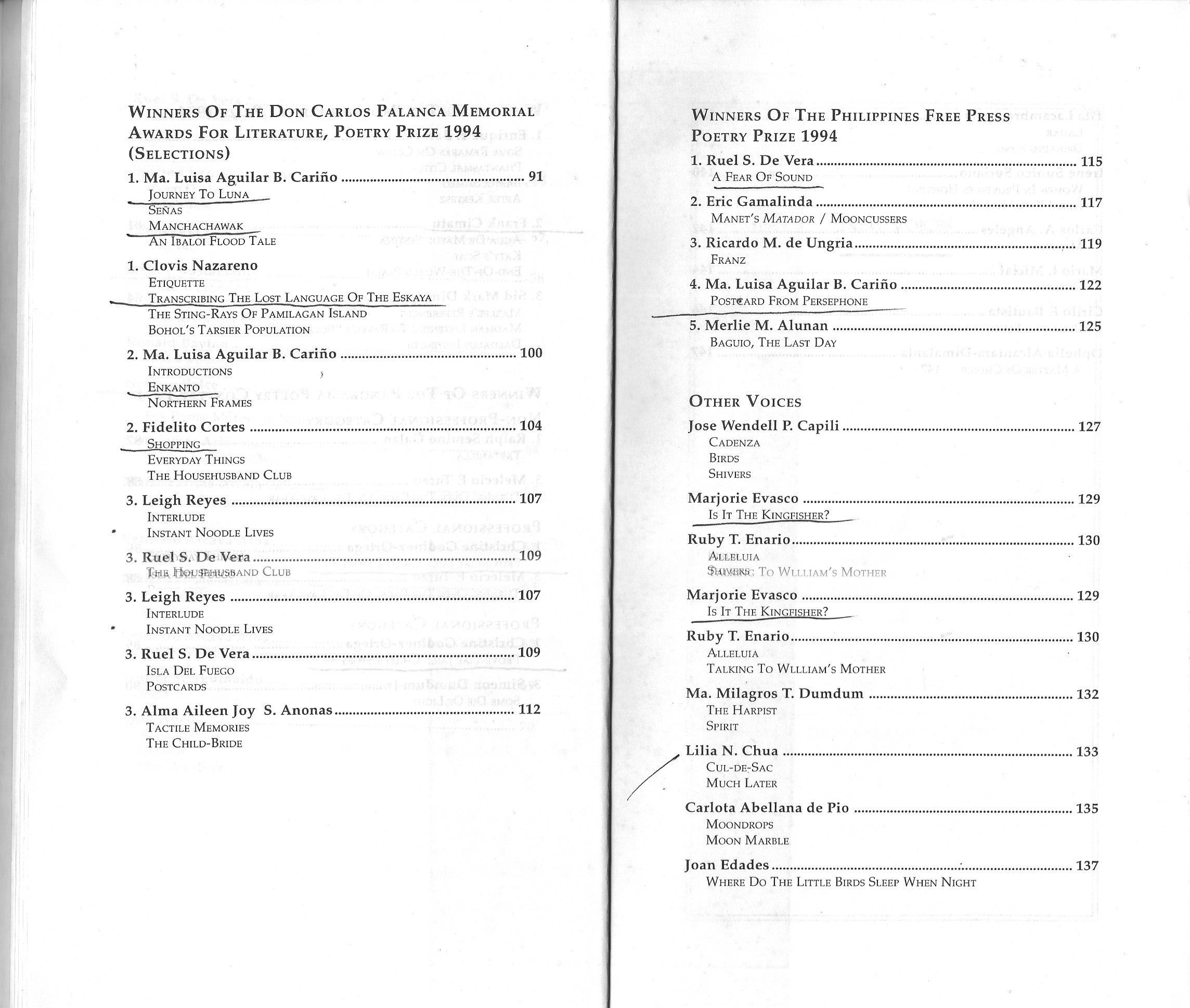
Shivers
Jose Wendell P. Capili. 1995. “Shivers.” Caracoa (95 - Gaudeamus), Pp. 128.
caracoa_1995_capili_4.jpeg
Jose Wendell P. Capili. 1995. “Waiting for 'Chali' (essay, on novelist Charlson Ong in Japan).” Philippines Free Press, no. 27 May, Pp. 38.
カピリ・ ホセ. 1995. “後戻りと前進:日本のフィリピンのオデッセイ.” 東京大学国際センターニュース, 6 (February), Pp. 6-7.
カピリ・ ホセ. 1995. “日系アメリカ人とフィリピン系アメリカ人の詩における移民のテーマ.” 東部研究の国際会議のトランザクション ( 東京:東方学会), XL , Pp. 239-240.
1994
Filipinos in Japan: The Other Side
Jose Wendell P. Capili. 1994. “Filipinos in Japan: The Other Side.” Philippine Daily Inquirer, 29 October , Pp. D3.
Maria Mangahas. 1994. Indigenous Coastal Resources Management: The Case of Mataw Fishing in Batanes, Pp. 56pp. Quezon City: Center for Integrative and Development Studies. University of the Philippines, Diliman.
Maria F Mangahas. 1994. “Mataw, Amung Nu Rayon, Anitu / Man, the “fish of Summer”, and the spirits—An Ethnography of Mataw Fishing in Batanes.” Department of Anthropology, University of the Philippines, Diliman. link to pdf Abstract
This monograph depicts the world of fishermen known as mataws, engaged in the traditional capture of seasonal flying fish and dorado in Batanes, Philippines. Mataw fishermen are organized as associations of users of vanua--natural access ways for a boat allowing transit between land and sea. Material from four different mataw associations in the municipalities of Mahatao and Basco who comprise some 30 percent of fishermen in these municipalities are presented. Bringing out the native's point of view, the study discusses the (1)economic arrangements supporting this individual fishing enterprise, (2)the ecological knowledge of fishermen, (3)the observance of taboos and the performance of rituals for the vanua, (4)the implementation of the organization's laws, (5)mataw groups' responses to changing aspects of fisheries in Batanes. Using a functionalist perspective, the study discusses how mataw worldview imaginatively and logically negotiates the uncertainties of fishing represented by the special but unpredictable 'fish of summer', the hazardous environment personified by invisible spirit beings, and the competition from fellow fishermen, through the observance of taboos, ritual and laws. The study shows that the ideals of mataw fishing stress individual skill and enterprise within the framework of communal cooperation, and high respect for environment. The rights to fish and use the vanua safely are gained by conducting an exchange through ritual sacrifice with the anitu or invisible spirit beings. The vanua becomes a sacred area for the duration of the fishing season and fishing success is explained within a framework of purity and pollution. Mataw organizations regulate access and exploitation of resources within the vanua and traditional fishing grounds, under the leadership of the ideal fisherman who makes the first fishing trip for the season and who possesses the power to ritually set precedents for the season. With the present innovations in technology and other historical trends, mataws both as individuals and as members of associations are seen to creatively negotiate the conflicting interests of fellow fishermen in the face of the opposed values of the indigenous worldview and dominant modernizing paradigm.
Statistical handbook on provincial quality of life indicators
1994. Statistical handbook on provincial quality of life indicators, Pp. 258. Quezon City: Council for People's Development (CPD) & Philippines-Canada Human Resource Development Program (PCHRD). Abstract
Experience has shown the dearth of government data when we need them most. Important statistics most of the time are national in scope and do not give a breakdown at the provincial level. This handbook was therefore produced in an attempt to fill the vacuum. The handbook is divided into nine major headings where provincial statistics are presented according to topic. There are variations in the presentation of the provinces, depending on the year the statistics were gathered. As a result, some tables do not incorporate the establishment of the Autonomous Region in Muslim Mindanao (ARMM) and new province3s like Guimaras, Saranggani and Biliran. The handbook is edited by Danilo Araña Arao. (ISBN IS 971-8849-02-5)
1993
Maria Mangahas. 1993. “Music Acculturation and two Philippine composers.” Diliman Review.
Jose Wendell P. Capili. 1993. “The Oscars and the FAP Awards: And the Winners Are..?” Philippines Free Press (24 April).
Jose Wendell P Capili. 1993. “Displacement and Reterritorialization in Philippine expatriate poetry in English in the United States, 1972-1992.” Department of English and Comparative Literature, College of Arts and Letters, University of the Philippines Diliman. Abstract
Expatriate poets -- Philippines, Criticism, Filipino American poets, Philippine poetry (English) http://www.elib.gov.ph/details.php?uid=5af703cb5d8ecbd214516441fff9b060
Jose Wendell P. Capili. 1993. “Requiem for Requiestas.” Philippines Free Press (7 August), no. 7 August.
1992
Jose Wendell P. Capili. 1992. “Algeciras (tula).” Dyaryo Filipino , 29 August , Pp. 5.
Kilusang Pambansa Demokratiko sa Wika
Kauna-unahang libro na nagdodokumento ng mga kongkretong hakbang at aktibidad na binalangkas ng Kilusang Pambansa-Demokratiko sa pagpapahalaga at pagpapalaganap ng pambansang wika.
Postscript to this year's Palanca Memorial Awards
Jose Wendell P. Capili. 1992. “Postscript to this year's Palanca Memorial Awards.” Manila Chronicle , 8 September , Pp. 15-16.
Resource manual on NGO-managed fund mechanisms
D Arao and J Lacambra. 1992. Resource manual on NGO-managed fund mechanisms. Edited by F Aldaba, D Arao, E Gonzales, J Lacambra, R Oliveros, and J Rocamora. Quezon City: Caucus of Development NGO Networks (CODE-NGO) and Transnational Institute.
A teacher's tragedy (nonfiction)
Jose Wendell P. Capili. 1992. “A teacher's tragedy (nonfiction).” Manila Chronicle Magazine , no. 26 September-2 October, Pp. 32.

Pages